

Syene.
001
Syene: Measure the Physical World
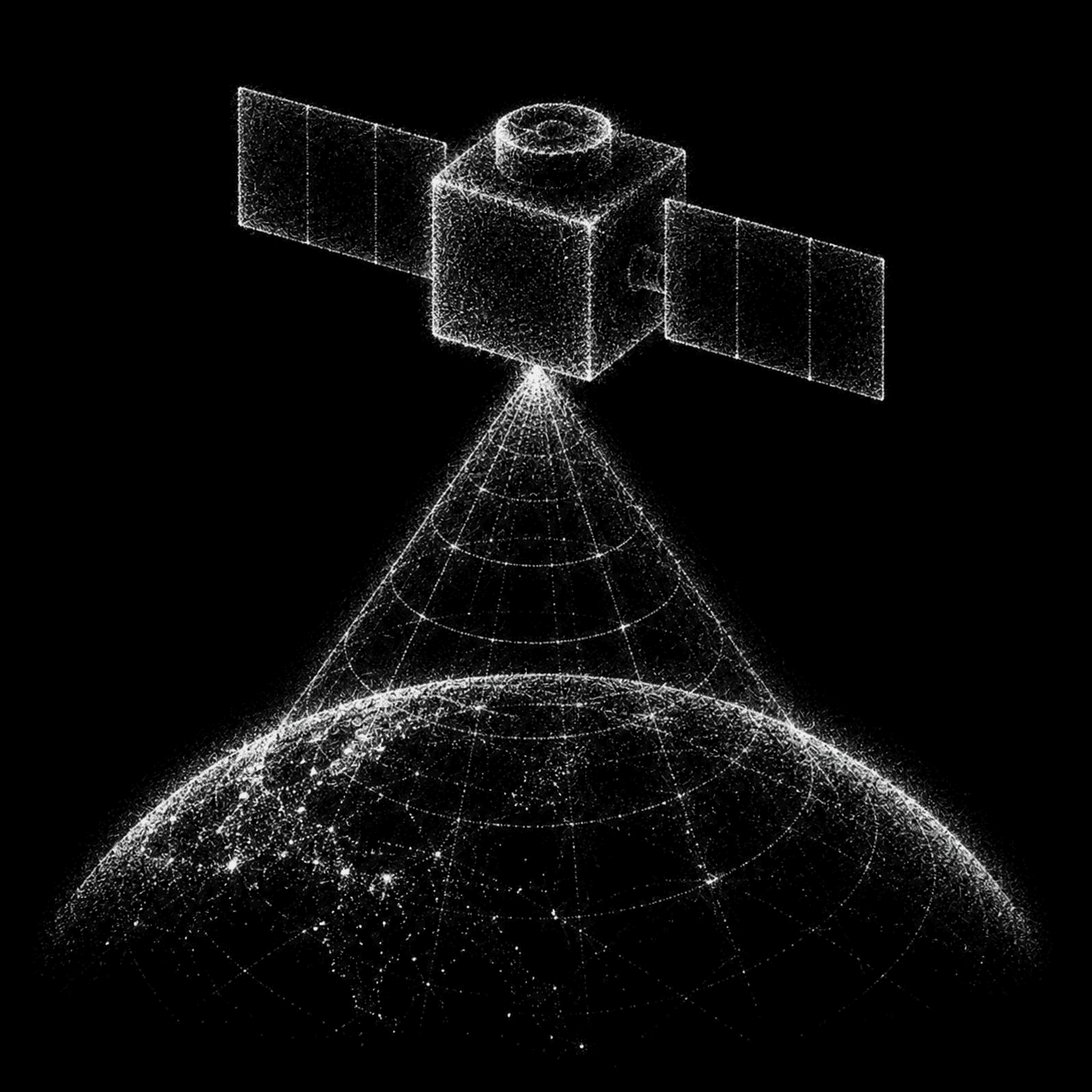
Every desk trading commodities today is waiting for someone else to say what already happened. Every position, every hedge, every risk decision timed around a report that lands days after the barrels moved, compiled from operator surveys, on a calendar the market did not choose.
In exchange, you get a number that every competitor receives at the same instant, for the same zero dollars.
That is not information. That is a schedule.
The desks that define the next era will be the ones that measure the physical world themselves. Not wait for it. Measure it. The tanks. The hulls. The terminals. The shadow geometry that says how full a roof tank is on Tuesday, rather than on the Wednesday after. Evidence that arrives when the world produces it, not when an agency publishes it.
The edge is not which report you read. The edge is what you measured before it printed.
002
Barrels
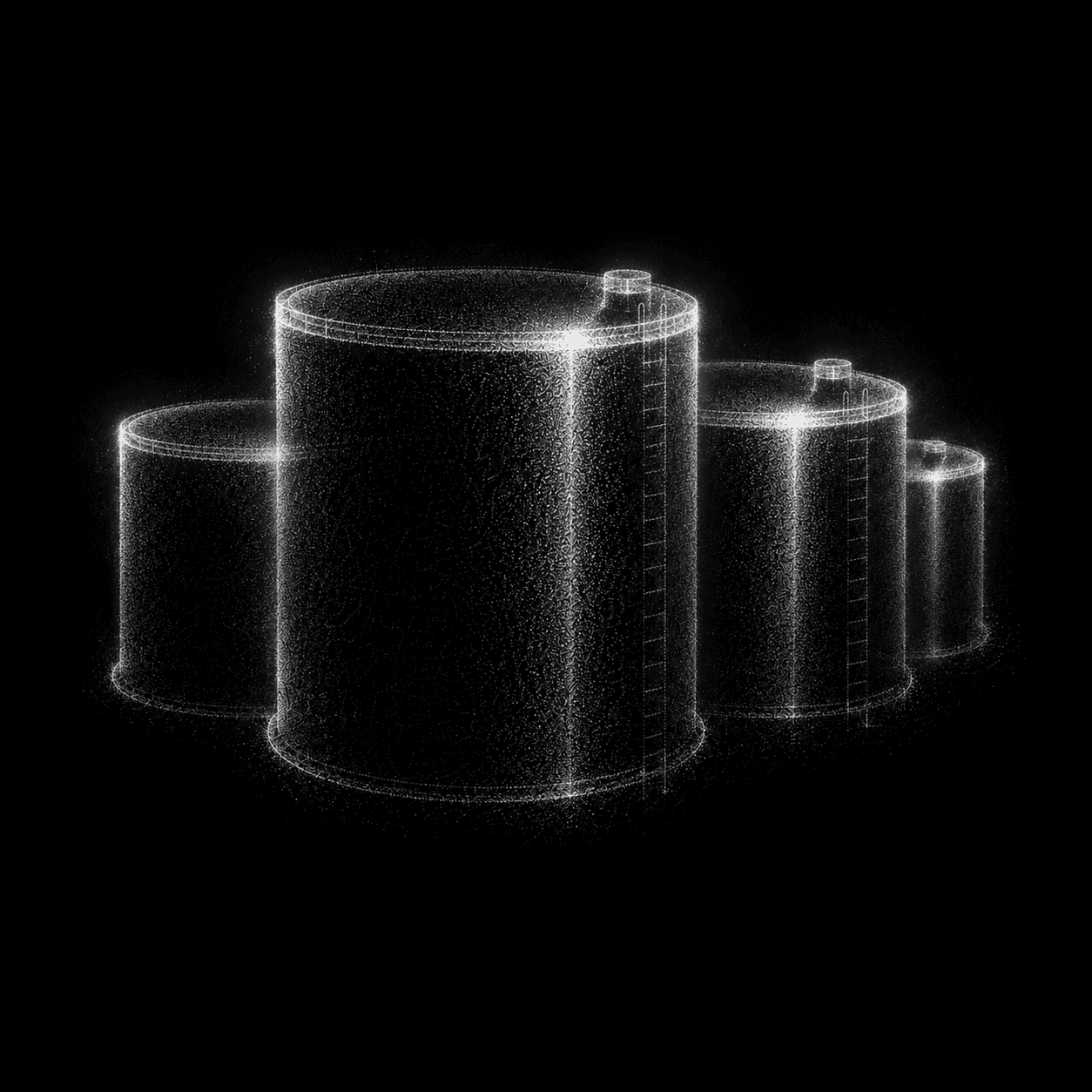
Why does measurement matter? Because of what is at stake.
Strip any commodity market down to its foundation and you find the same thing. Barrels. Tons. Cubic meters. Physical things sitting in physical places. Every cargo ever loaded. Every tank ever filled. Every draw, every build, every ton railed, stored, burned, or shipped across every terminal the market has ever touched.
The barrels are the market. Everything else is a story we tell about them.
And right now, most of the market takes its picture of those barrels, the entirety of what is physically true, from three or four weekly reports. Trading the announcement of a thing instead of the thing.
You cannot have an edge in a market you are only reading about.
003
The Report Economy
For decades we built institutions to count those barrels. Surveys. Filings. Bills of lading. Weekly statistical releases. Each one a container for some fraction of what the physical world did. Tally sheets became forms. Forms became surveys. Surveys became a release calendar the whole market sets its watch by.
But containers do not observe. They collect. They wait for an operator to answer, a form to clear, a revision to land. That work has always fallen to reporting. And the first wave of alternative data did not change it, it just resold the same reports faster, or sold a black box that could not say where its number came from.
Continuous measurement of the physical economy, observed directly, timestamped honestly, and scored in public, remains largely untouched territory.
“When you can measure what you are speaking about, and express it in numbers, you know something about it.”
A report tells you what was collected. A measurement tells you what was there.
004
Compounding Measurement
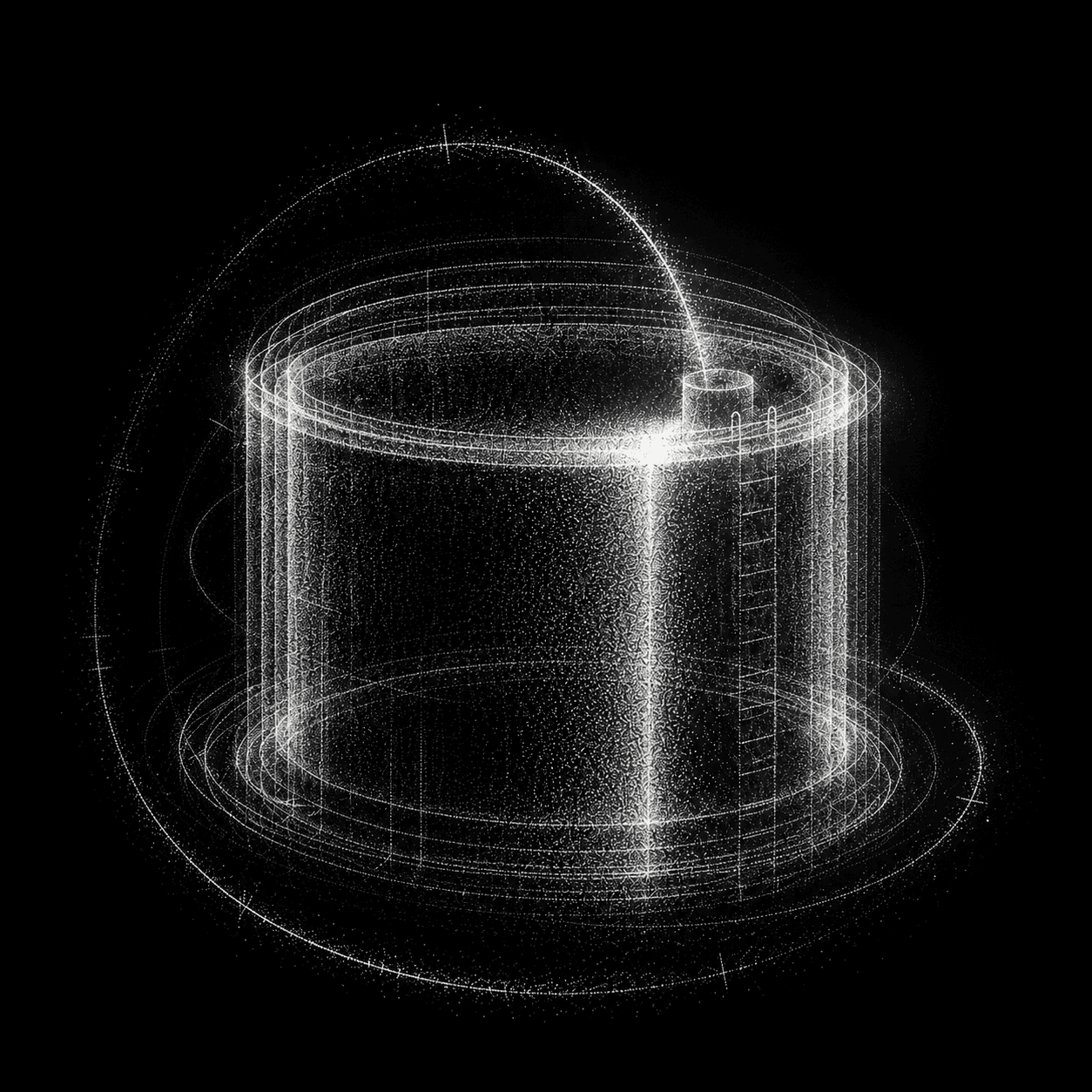
When knowing what is physically true is reduced to observation you control, when every scene is read, every tank is stated with an error bar, and every value carries the moment it became knowable, the desk stops reacting and starts arriving early.
A floating roof in Cushing drops half a meter on a Tuesday and the nowcast moves Tuesday night, not on the Wednesday after. A cargo sits three weeks off a coast and it is floating storage in your data before it is a headline. A refinery goes quiet and the flare says so before the maintenance notice does.
What does that cost? Not a six figure contract with a vendor who will not show you the method. The cost of compute and a public satellite pass. And unlike a report, a measurement compounds. Every scene read is another point in a record that gets longer, better calibrated, and harder to argue with.
That is the difference between a headline and an edge.
005
Evidence Is the New Alpha

Where does edge live? In the physical world itself. But not in the imagery alone, in what the imagery is turned into. A scene sitting in an archive is an asset. A scene read without an error bar is a guess. A scene read with an uncertainty and a knowledge time is evidence, and evidence is the only thing that survives contact with a backtest.
Most desks already have more data than they can use. The land grab is not for more feeds. It is for the measurement layer that turns observation into something you can put in front of a risk committee. A number, its error bar, its timestamp, and the method that produced it, open to inspection.
The desk that owns the measurement owns something no report can give it. Everyone else is trading the announcement.
006
The Measurement Stack

The stack for measuring a physical market is not simple. It spans orbital mechanics, radiometry, statistics, market microstructure, and ordinary engineering discipline. No single layer solves it, but the more the layers agree, the harder the record is to break.
- A bitemporal lake where every row knows when it became knowable
- Sub pixel shadow estimation against a forward model of each tank
- Uncertainty on every value, widened by haze, sun angle, and revisit gaps
- A typed signal registry carrying cadence, units, and visibility
- A public method doc and a committed fixture for every signal
- Walk forward scoring against the print, published either way
- Fixture mode on every connector, so the system runs with no keys at all
- An analyst layer that can only answer from what the lake will return
Every layer built so a number can be checked, and so no study can see what you could not have seen.
007
Measurements, Not Predictions

The critical decision in market data: do you buy a forecast, or a measurement?
A forecast hands you a number and a confident voice. Ask it where the number came from, what it would look like if it were wrong, and when you could first have known it, and it comes apart. It does not show its method. It does not keep score. And it was fit on the same history it is being sold against.
A measurement hands you less, and it is worth more. Here is the crescent. Here is the tank. Here is the fill, plus or minus. Here is the moment it became knowable. Here is the path from raw scene to published number, and here is how the calls scored against the print. Misses included.
Traders should be wary of the seduction of the confident call, the vendor that predicts everything and can prove nothing. Every impressive backtest tends to end with “and then we refit it.” Every promise of alpha ends with a disclaimer in small type.
- Prints scored
- 23
- Correlation
- 0.66
- Hit rate
- 46%
- MAE
- 1.40 mm bbl
We do not sell you a view. We sell you what is physically there, and we let you check it.
008
The Inevitable Destination
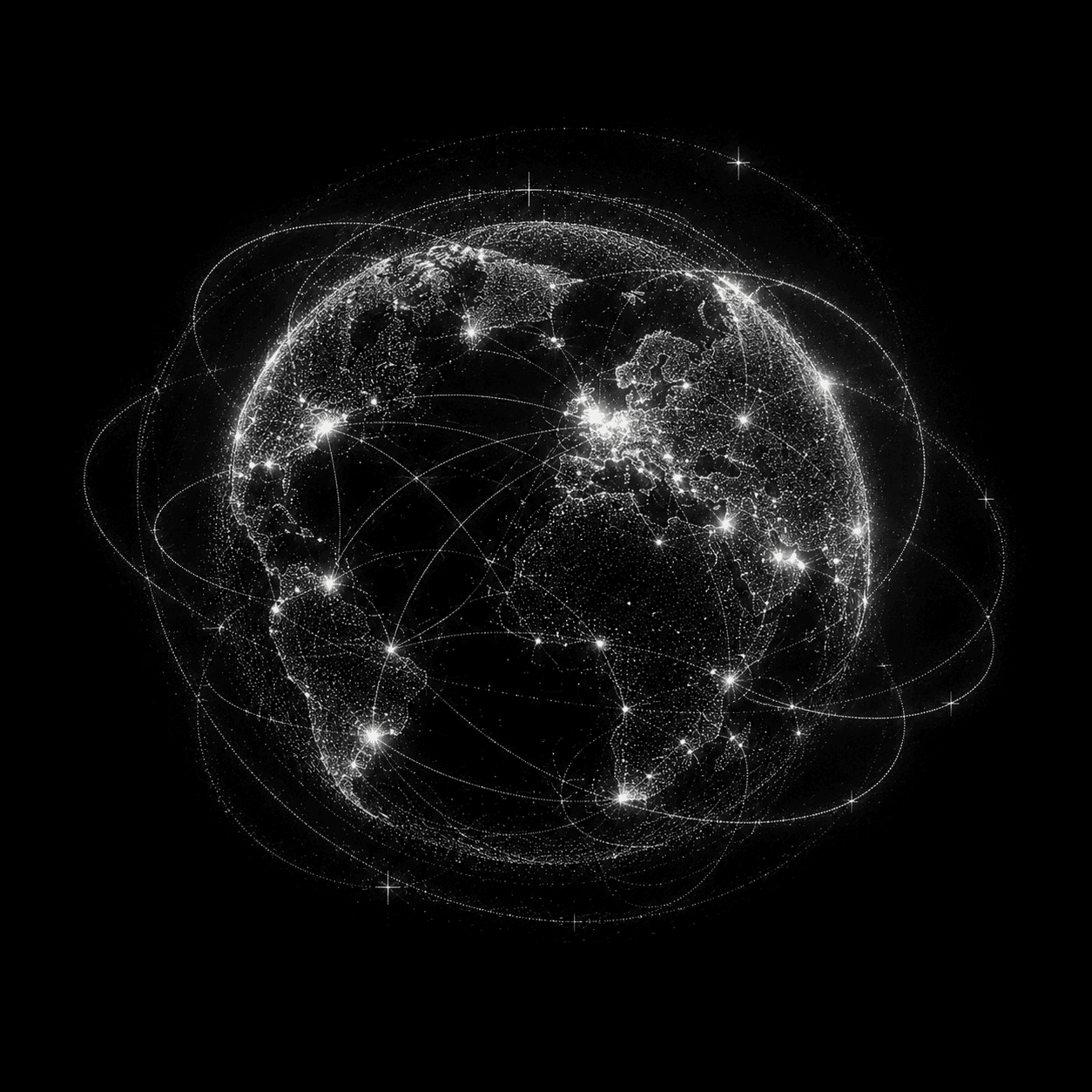
The trajectory is clear. Public satellite programs give away imagery that cost billions to put in orbit. Revisit times compress every year. The cost of reading a scene falls by orders of magnitude per generation of model. The instruments for measuring the physical economy have never been this cheap or this open.
The inevitable destination is a continuous public record. Every tank, every hull, every terminal, every complex, measured on the cadence the physical world sets rather than the one a release calendar sets. Not only crude, and not only Cushing. Gas, power, metals, ags. The same rule in each. A value, an error bar, a timestamp, and a method anyone can read.
That is what Syene builds.
The first record of the physical economy anyone can check.
The physical world, measured.